
- English
- Español
- Português
- русский
- Français
- 日本語
- Deutsch
- tiếng Việt
- Italiano
- Nederlands
- ภาษาไทย
- Polski
- 한국어
- Svenska
- magyar
- Malay
- বাংলা ভাষার
- Dansk
- Suomi
- हिन्दी
- Pilipino
- Türkçe
- Gaeilge
- العربية
- Indonesia
- Norsk
- تمل
- český
- ελληνικά
- український
- Javanese
- فارسی
- தமிழ்
- తెలుగు
- नेपाली
- Burmese
- български
- ລາວ
- Latine
- Қазақша
- Euskal
- Azərbaycan
- Slovenský jazyk
- Македонски
- Lietuvos
- Eesti Keel
- Română
- Slovenski

How Decorative Lighting Is Changing Modern Outdoor Spaces
Outdoor lighting is no longer limited to basic illumination. For residential properties, commercial buildings, gardens, terraces, and festive installations, lighting is increasingly being used to shape the visual character of a space while providing practical nighttime illumination. This shift has increased demand for lighting products that combine flexible installation, weather resistance, intelligent control, and efficient operation.
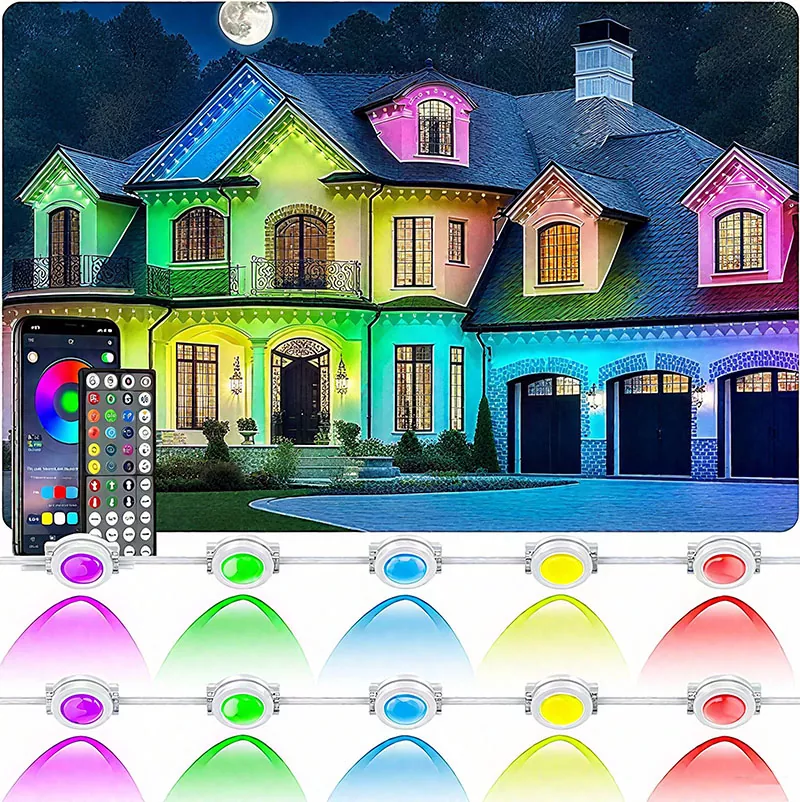
GJQ Light develops decorative lighting solutions for outdoor and architectural applications, with its Decorative Light designed around flexible installation and smart control. The product uses an IP67 waterproof design and supports both app and remote-control operation, making it suitable for spaces where lighting effects need to change between everyday use and special occasions.
For lighting distributors, project contractors, landscape designers, and OEM buyers, the key consideration is not simply how attractive a lamp looks. Product protection, installation flexibility, control methods, energy management, and long-term outdoor reliability all need to be evaluated before selecting a decorative lighting solution.
Why Decorative Lighting Has Become More Functional
Lighting Is Part of the Space Design
Modern outdoor lighting is increasingly integrated into the architecture and landscape rather than being treated as an independent fixture. Eaves, fences, terraces, gardens, building outlines, and other structures can all become part of the lighting design.
This approach allows lighting to emphasize architectural lines and landscape features while creating a more consistent nighttime appearance. For commercial properties, it can also contribute to the visual identity of restaurants, hotels, retail spaces, and other public areas.
One Lighting System Can Serve Different Occasions
Outdoor decorative lighting may be required for everyday residential use during one period and for parties, holidays, or commercial events during another. A flexible lighting system can reduce the need to install separate lighting arrangements for every occasion.
GJQ Decorative Light is designed to support this type of multi-scenario use, allowing users to adjust lighting through app and remote-control functions.
Core Parameters of GJQ Decorative Light
| Parameter | Specification | Practical Value |
|---|---|---|
| Product Type | Decorative Light | Outdoor decorative and atmospheric lighting |
| Brand | GJQ Light | Lighting solution for residential and commercial projects |
| Waterproof Rating | IP67 | Suitable for outdoor environments with exposure to rain and moisture |
| Control Method | Mobile App + Remote Control | Provides flexible lighting adjustment options |
| Installation | Flexible light strip structure | Can adapt to eaves, fences, curves, and other structures |
| Application | Courtyards, gardens, terraces, commercial spaces | Supports residential and commercial decorative projects |
| Lighting Management | Timer and scheduling functions | Supports automated daily lighting routines |
| Outdoor Use | Residential and commercial exterior spaces | Designed for decorative outdoor environments |
| Energy Management | Scheduled operation | Helps avoid unnecessary lighting operation |
The exact electrical specifications, power consumption, voltage options, dimensions, LED configuration, color modes, and installation accessories should be confirmed with GJQ Light according to the specific product configuration and project requirements.
IP67 Protection for Outdoor Applications
Protection Against Outdoor Moisture
Outdoor decorative lighting is exposed to environmental conditions that indoor lighting does not normally encounter. Rain, humidity, dust, temperature changes, and prolonged outdoor exposure can all influence lighting performance.
The IP67 protection rating of the GJQ Decorative Light provides a defined level of protection against dust ingress and temporary water immersion under standardized test conditions. This makes the product suitable for a range of outdoor decorative applications.
Protection Does Not Replace Proper Installation
An IP rating describes the tested protection level of the product and should not be interpreted as protection against every possible installation condition. Cable connections, power supplies, controllers, mounting points, and joints also need to be installed according to the manufacturer's instructions.
For large outdoor projects, installers should consider drainage, cable routing, mounting stability, exposure to standing water, and accessibility for future inspection.
Flexible Installation for Different Structures
Adapting to Eaves and Building Lines
One of the practical advantages of flexible decorative lighting is the ability to follow architectural contours. Eaves and building edges often include corners and changes in direction that are difficult to illuminate consistently with rigid fixtures.
A flexible light-strip structure can follow these lines more easily, allowing installers to create continuous visual effects along building outlines.
Fences, Gardens, and Terraces
The same installation concept can be applied to fences, garden structures, terraces, and other outdoor features. This makes flexible decorative lighting useful when the project requires both functional installation and visual continuity.
Before installation, the total length, bending requirements, mounting method, power-supply position, and controller location should be determined to avoid unnecessary modifications during construction.
Smart Control Makes Outdoor Lighting Easier to Manage
Mobile App Control
GJQ Decorative Light supports mobile app control, allowing users to manage lighting functions without relying entirely on a physical switch. This can be particularly useful when lights are installed in difficult-to-access locations such as roof edges or building eaves.
For commercial projects, centralized or convenient control can also simplify daily operation when lighting needs to be adjusted according to opening hours, events, or seasonal requirements.
Remote Control for Direct Operation
Although smart control can improve convenience, some users still prefer a dedicated remote control for quick adjustments. Providing both app and remote-control options gives users more flexibility depending on the situation.
This dual-control approach can be useful in residential spaces where different family members may have different preferences for operating the lighting system.
Automated Lighting and Energy Management
Scheduled On and Off Functions
Decorative lighting does not necessarily need to remain switched on throughout the night. Scheduling functions allow users to determine when the lights should operate according to daily routines or special events.
For example, lights can be programmed to operate during evening hours and switch off later at night when decorative illumination is no longer required.
Day-Night Lighting Management
Automated lighting can also be coordinated with changes between daytime and nighttime. GJQ's product information describes night and morning modes that can automatically manage lighting operation around dusk and sunrise.
This type of automation can reduce unnecessary operation while ensuring that the lighting is available when it is actually needed.
Residential Applications
Courtyard Lighting
In residential courtyards, decorative lighting can be used to outline fences, garden structures, seating areas, and architectural elements. Soft lighting can create a more comfortable nighttime environment without relying solely on bright general-purpose fixtures.
For homeowners, the ability to change lighting modes according to daily use, family gatherings, or holidays provides greater flexibility than fixed decorative lighting.
Terrace and Patio Decoration
Terraces and patios are increasingly used as extensions of indoor living areas. Decorative lighting can help visually connect these spaces with the main building while creating a more comfortable atmosphere after sunset.
Flexible installation also allows lighting to be integrated into railings, edges, architectural details, and other structures without significantly changing the existing design.
Commercial Applications
Restaurants and Hospitality Spaces
For restaurants, cafés, hotels, and hospitality venues, exterior lighting can influence how customers perceive the property after dark. Carefully positioned decorative lighting can emphasize entrances, terraces, architectural features, and outdoor seating areas.
Smart scheduling can also help commercial operators coordinate lighting operation with business hours and special events.
Retail and Commercial Buildings
Commercial buildings can use decorative lighting to create recognizable exterior outlines and improve nighttime visibility. For brands with distinctive architectural features, lighting can become part of the overall visual presentation.
For large installations, designers should balance decorative effects with energy consumption, maintenance access, and local lighting regulations.
Decorative Lighting for Holidays and Events
Creating Temporary Atmosphere Changes
Holiday and event lighting often requires a different visual atmosphere from normal daily operation. Decorative lighting can help create these changes without replacing the complete lighting installation.
For example, a residential courtyard can use a relatively simple lighting arrangement during normal evenings and adjust the lighting effects during family celebrations or seasonal holidays.
Commercial Event Applications
Commercial venues can also use decorative lighting during product launches, festivals, promotional campaigns, and seasonal events. Flexible control allows lighting arrangements to be adjusted according to the specific event.
This makes smart decorative lighting useful not only as a permanent installation but also as part of a broader event-lighting strategy.
Installation Factors Buyers Should Consider
Measure the Installation Area
Before ordering, buyers should accurately measure the total installation length and identify corners, curves, connection points, and power-supply locations.
For commercial projects, a detailed installation drawing can help determine the required quantity of lighting products and accessories while reducing material waste.
Plan the Power Supply
The power-supply arrangement should be considered before installation begins. Cable length, voltage drop, controller position, connection points, and access to electrical equipment can all affect the final system configuration.
For longer installations, buyers should ask the supplier for technical recommendations based on the actual product configuration.
Consider Maintenance Access
Decorative lighting installed on eaves, roofs, fences, or other elevated structures may be difficult to access after installation. Maintenance access should therefore be considered during the initial design stage.
A well-planned installation can reduce future labor costs and make inspection or replacement easier.
Quality Control in Decorative Lighting Manufacturing
Material and Assembly Inspection
Outdoor lighting needs to maintain stable performance under changing environmental conditions. Material selection, waterproof construction, cable connections, LED components, controllers, and assembly quality all contribute to the reliability of the finished product.
For B2B buyers, supplier quality control should cover incoming materials, production assembly, electrical testing, waterproof construction, appearance inspection, and final product testing.
Batch Consistency Matters
Large lighting projects often require hundreds or thousands of units. Inconsistent color, brightness, dimensions, connectors, or control performance can create visible differences after installation.
Batch-level quality control is therefore particularly important for commercial projects where lighting needs to appear uniform across a large area.
How GJQ Light Approaches Decorative Lighting
GJQ Light develops lighting products across outdoor, landscape, holiday, smart, and commercial lighting categories. Its product range includes decorative eave lights, point lights, permanent outdoor lighting, Christmas lighting, and other intelligent lighting products.
The company's decorative lighting products focus on combining outdoor durability with flexible control and installation. Its published product information identifies IP67 protection, app and remote control, flexible installation, and scheduled lighting management as key characteristics of the Decorative Light.
For project buyers, this approach provides a basis for selecting decorative lighting according to the actual environment instead of focusing only on appearance.
What B2B Buyers Should Confirm Before Ordering
Technical Specifications
Buyers should confirm voltage, power consumption, lighting color, control method, waterproof rating, dimensions, connection method, operating temperature, and available accessories before placing an order.
Project Compatibility
The supplier should receive information about the intended installation environment, total lighting length, mounting structure, climate conditions, and control requirements. This allows the lighting configuration to be evaluated against the actual project.
OEM and Customization Requirements
For distributors and private-label brands, buyers may also need customized logos, packaging, product labels, control interfaces, lighting effects, or other product details.
These requirements should be confirmed before mass production so that product specifications and branding remain consistent throughout the order.
Why GJQ Decorative Light Fits Modern Outdoor Projects
Modern outdoor lighting projects increasingly require a combination of visual appeal, environmental resistance, flexible installation, and convenient control. A decorative light that provides only illumination may not meet the requirements of more sophisticated residential and commercial projects.
GJQ Decorative Light combines an IP67 outdoor protection design with flexible installation and app and remote-control options. Its scheduling functions also provide a practical way to manage lighting according to daily routines and special occasions.
For lighting distributors, landscape contractors, architects, property developers, and OEM buyers, these characteristics provide a flexible platform for residential courtyards, terraces, gardens, commercial buildings, and event spaces.
Final Considerations for Decorative Lighting Procurement
Choosing outdoor decorative lighting requires a balance between appearance, installation requirements, environmental protection, control functions, energy management, and long-term maintenance. The most suitable product depends on the actual structure and operating conditions of the project.
The Decorative Light from GJQ Light uses an IP67 waterproof design and supports app and remote control, while its flexible structure can adapt to eaves, fences, curves, courtyards, terraces, and commercial spaces.
For B2B buyers, the best procurement process is to define the installation environment first, confirm the complete electrical and mechanical specifications, evaluate sample performance, and establish clear quality-control requirements before mass production. This approach can help ensure that decorative lighting delivers both the desired visual effect and reliable outdoor performance.